Public code does not stay public by itself

Progress towards “Public Money? Public Code!” can be reversed. NHS England’s continued withdrawal of public code shows why our work does not end with political commitments: we also monitor their implementation and respond when public administrations change course.
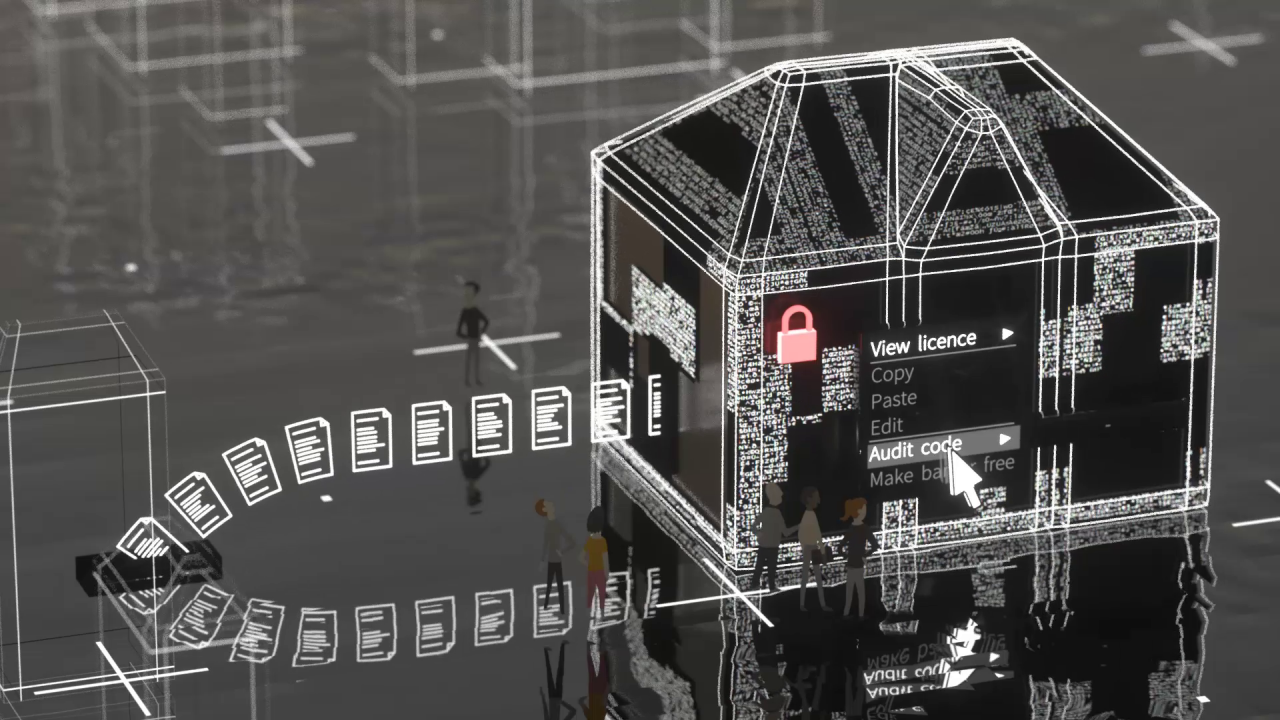
Much of our work for “Public Money? Public Code!” is about moving forward together: building a future in which publicly financed software is available to everyone as Free Software, and public administrations can use, understand, share, and improve the digital infrastructure on which they depend. At the Free Software Foundation Europe (FSFE), we work to embed this principle in legislation, procurement rules and administrative practice.
But progress is not a straight line. Across Europe, public administrations can take a step backwards even where clear standards are already in place, disregarding previous commitments and withdrawing code that was already public. This is precisely what has happened at England’s National Health Service (NHS England) over the past months.
Although its own Service Standard requires new code to be “open and reusable”, NHS England instructed its teams to make public repositories private unless an explicit exception was granted. This was presented as a temporary measure intended to prevent automated systems from scanning public code for vulnerabilities.
When reports of this shift emerged in May 2026, the FSFE responded immediately. We rejected this return to security through obscurity: withdrawing public code does not prevent automated analysis of existing copies or deployed systems, but restricts independent scrutiny and makes it harder for others to help find and fix vulnerabilities. We therefore urged NHS England to follow its own open-by-default standard. Shortly afterwards, the UK Government Digital Service published guidance confirming that restricting access to code is no substitute for proper maintenance, secure development, and the timely handling of vulnerabilities.
Support our work for public code!
Nevertheless, NHS England has continued in the opposite direction. Six months later, there is no sign that its shift to “private by default” has been reversed. Instead, the situation has worsened: since the beginning of September alone, at least 152 repositories across four NHS-related organisations are no longer available at their previous public locations. Overall, roughly one third of their repositories have been withdrawn from public access since May. They include code and documentation for primary care services, vaccinations and screening, and interoperability standards, as well as analytical code used to produce health statistics.
This setback shows why our work for “Public Money? Public Code!” across Europe cannot end when a government makes a political commitment. We must also follow what happens afterwards. Are the new rules implemented without being weakened by loopholes? Is publicly financed software actually published as Free Software? And do public administrations remain committed over time, even when political priorities change?
Monitoring implementation over time is part of our day-to-day work as a watchdog. When public administrations reverse course on Free Software, we make the setback visible and challenge the arguments used to justify it. We build public pressure and demand that they release publicly financed software as Free Software and keep it available.
This work requires persistence. A decision to withdraw public code can be taken quickly, but its consequences continue long after public attention has moved on. We continue to follow such cases for months or even years, while working to make Free Software the norm in public administrations and defend that progress when it is threatened.
Publicly financed software belongs to the public. Together, we can keep it that way.